
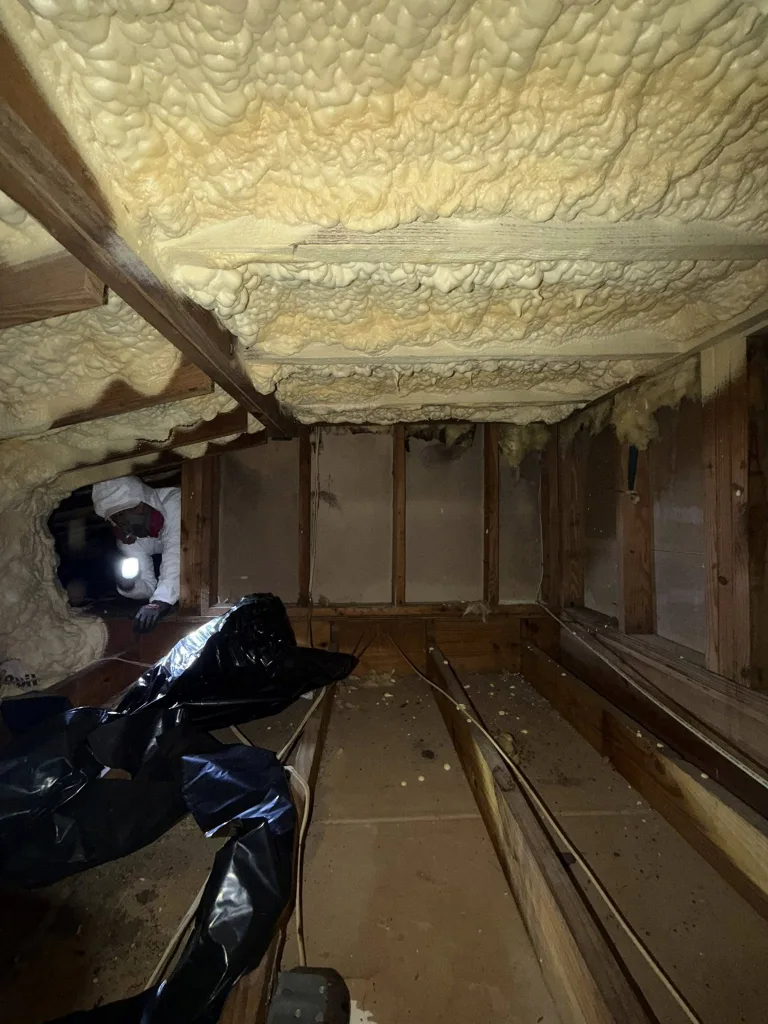
Attic Mold in Gainesville FL Homes: Why Attics Are a Hidden Mold Risk
Quick Answer: Why does attic mold happen in Gainesville homes?
Attic mold in Gainesville homes usually happens when high humidity, roof leaks, poor attic ventilation, wet insulation, or storm-related moisture stays trapped inside the attic. Because attics are not checked often, mold can grow on roof sheathing, rafters, trusses, and insulation before homeowners notice visible signs inside the home.
If you smell a musty odor upstairs, see ceiling stains, notice damp insulation, or find dark growth on attic wood, it may be time to schedule a professional attic mold inspection.
Hub Mold Experts provides trusted mold removal in Gainesville FL for homeowners dealing with hidden moisture, attic mold, storm damage, and indoor air quality concerns.
Why Gainesville Attics Are at Higher Risk for Mold
Gainesville’s warm, humid climate creates ideal conditions for attic moisture problems. Mold needs three things to grow: moisture, organic material, and time. Attics often contain wood framing, roof sheathing, dust, insulation, and hidden areas where moisture can stay unnoticed.
In many Gainesville homes, attic mold is caused by a combination of:
- High indoor and outdoor humidity
- Poor soffit or ridge ventilation
- Small roof leaks after storms
- Bathroom fans venting into the attic
- Wet or compressed insulation
- Air leaks from the living space
- Condensation on roof decking or metal fasteners
For a broader breakdown of local moisture issues, read our guide on what causes mold in Gainesville homes .
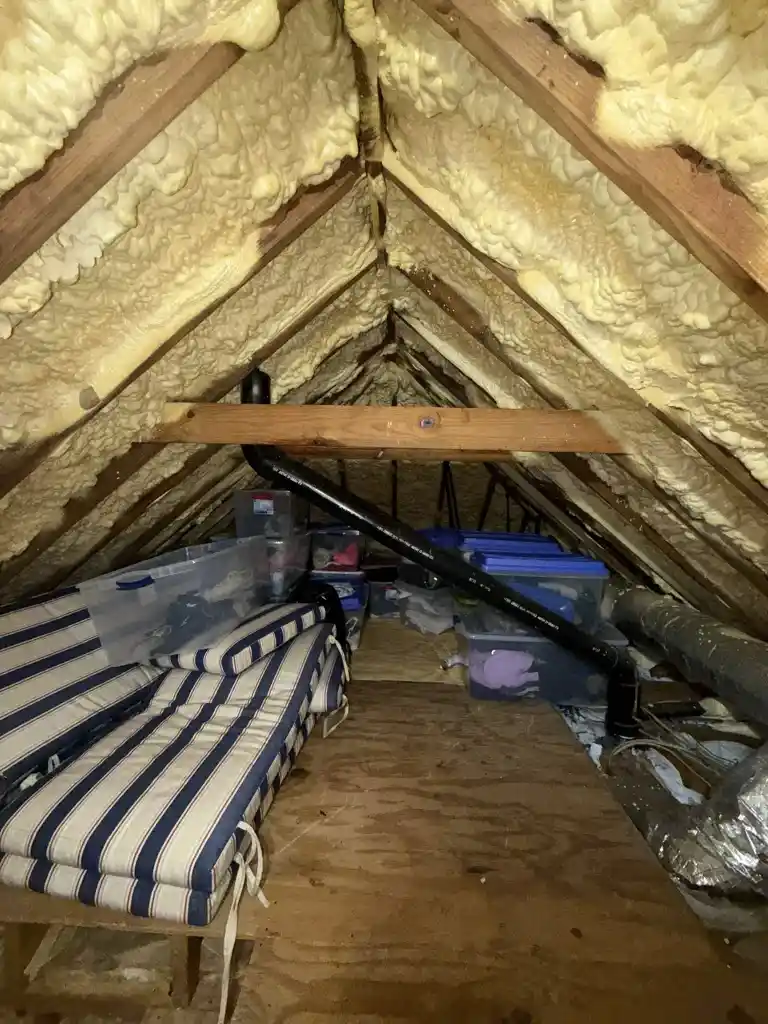
Common Causes of Attic Mold in Gainesville Homes
1. High Humidity and Trapped Moisture
Humidity is one of the biggest mold triggers in North Florida homes. When humid air enters the attic and cannot escape properly, moisture may collect on roof decking, rafters, insulation, and other building materials.
This is especially common when attic ventilation is poor or when indoor air leaks into the attic through ceiling gaps, recessed lights, plumbing penetrations, or attic access panels.
2. Roof Leaks After Heavy Rain or Storms
Gainesville storms can expose small roof problems. A minor leak around a vent boot, chimney flashing, skylight, roof valley, or missing shingle can allow water to enter the attic slowly.
A roof leak does not always create a ceiling stain right away. Sometimes water soaks the insulation or dampens the roof sheathing first. If stormwater or roof leaks have affected your home, fast water damage restoration in Gainesville can help reduce the chance of mold spreading.
3. Poor Attic Ventilation
Your attic needs steady airflow to remove warm, damp air. When soffit vents, ridge vents, or gable vents are blocked or undersized, humidity can stay trapped.
Common ventilation problems include:
- Blocked soffit vents
- Insulation covering air channels
- Missing or damaged ridge vents
- Bathroom exhaust fans ending inside the attic
- Not enough intake and exhaust ventilation
- Air leaks from the living space below
When ventilation is not corrected, mold can return even after surface cleaning.
4. Bathroom Fans Venting Into the Attic
Bathroom exhaust fans should move humid air outside the home. If the fan vents into the attic, it sends warm shower moisture directly into the roof cavity.
Over time, this can cause:
- Damp insulation
- Mold on roof sheathing
- Musty attic odors
- Condensation on nails or metal parts
- Dark staining on rafters and trusses
This is one of the most common attic mold causes in older homes.
5. Wet or Compressed Insulation
Insulation should stay dry and evenly spread. When insulation becomes wet, compressed, or blocked against vents, it can hold moisture and reduce airflow.
Wet insulation may also hide mold growth underneath or around roof framing. In many cases, contaminated insulation needs to be removed safely during mold remediation.
Signs You May Have Attic Mold
Most homeowners do not inspect their attic regularly, so early warning signs often appear in other parts of the home.
Musty Smell Upstairs
A musty, earthy, or damp smell near bedrooms, hallways, closets, or the attic access point can be a sign of hidden attic mold. The smell may become stronger during humid weather or when your HVAC system runs.
Ceiling Stains or Discoloration
Brown, yellow, gray, or dark stains on the ceiling may point to roof leaks, condensation, or moisture above the drywall. Pay attention to stains near:
- Chimneys
- Roof valleys
- Bathroom vents
- Skylights
- Plumbing penetrations
- Exterior walls
Allergy-Like Symptoms Indoors
Mold affects people differently. Some homeowners may notice congestion, coughing, headaches, eye irritation, or worsening asthma-like symptoms when they are inside the home. These symptoms can have many causes, but hidden mold may be one possible factor.
If symptoms are serious or ongoing, speak with a medical professional.
Visible Growth on Attic Wood
If you safely look inside your attic and see dark, green, gray, black, or white growth on roof sheathing, rafters, or trusses, avoid disturbing it.
Common visible signs include:
- Dark staining on plywood or OSB
- Fuzzy growth on wood surfaces
- Water stains on rafters
- Damp or matted insulation
- Condensation on nails
- Musty odor near the attic hatch
If you see these signs, it is better to schedule a mold inspection before trying to clean it yourself.
Is Attic Mold Dangerous?
Attic mold should not be ignored. It may affect your home’s structure, insulation, indoor air quality, and resale value.
Structural Concerns
Mold grows on organic materials, including wood and dust on wood surfaces. If the attic moisture problem continues, wood may stay damp long enough to develop rot or deterioration.
Possible problems include:
- Stained roof sheathing
- Damaged rafters or trusses
- Soft or weakened wood
- Deteriorated insulation
- Persistent musty odors
- Increased repair costs over time
The biggest issue is usually not just the mold itself. It is the moisture source that allowed the mold to grow.
Indoor Air Quality Concerns
Attics are not completely sealed from living spaces. Air can move through ceiling gaps, recessed lights, attic access panels, duct openings, and plumbing penetrations.
If mold is disturbed or attic air moves into the home, spores and odors may affect indoor air quality. Sensitive individuals may notice symptoms more quickly.
Energy Efficiency Problems
Wet or compressed insulation does not perform as well as dry insulation. If attic insulation is affected by moisture or mold, your HVAC system may work harder to keep the home comfortable.
This can lead to:
- Hot or cold rooms
- Higher energy bills
- Poor indoor comfort
- More humidity problems
Why DIY Attic Mold Cleanup Often Fails
Many homeowners try to clean attic mold with bleach, sprays, fans, or household vacuums. This usually does not solve the problem.
Bleach Does Not Fix the Moisture Source
Bleach may lighten stains on some surfaces, but it does not repair roof leaks, improve ventilation, remove wet insulation, or stop humid air from entering the attic.
If the moisture problem remains, mold can come back.
Scrubbing Can Spread Spores
Scrubbing, sanding, brushing, or vacuuming mold without containment can release spores into the air. These spores may spread into clean areas of the home through attic openings or HVAC pathways.
Attics Can Be Unsafe
Attic work can be dangerous because of:
- Extreme heat
- Poor visibility
- Electrical hazards
- Weak ceiling drywall
- Contaminated insulation
- Limited walking space
- Respiratory exposure
For safe results, professional attic mold remediation uses containment, HEPA filtration, protective equipment, controlled removal, and moisture correction.
Professional Attic Mold Remediation: What to Expect
A proper attic mold remediation plan should do more than clean visible mold. It should identify the moisture source, control contamination, remove or clean affected materials, and reduce the chance of future growth.
Hub Mold Experts provides mold remediation services in Gainesville for hidden mold, attic mold, water damage-related mold, and moisture problems.
Step 1: Inspection and Moisture Mapping
The first step is to inspect the attic and locate the moisture source.
This may include checking:
- Roof sheathing
- Rafters and trusses
- Insulation
- Soffit and ridge vents
- Exhaust fan ducts
- Plumbing and electrical penetrations
- Roof leak points
- Ceiling stains
- Humidity and moisture readings
Moisture meters and thermal imaging may be used to find hidden damp areas.
Step 2: Containment and Air Filtration
Before affected materials are disturbed, containment may be set up to help prevent spores from spreading into the living space.
This may include:
- Sealing the attic access area
- Using HEPA air filtration
- Creating controlled work zones
- Protecting nearby areas
- Using proper PPE
Step 3: Safe Cleaning or Removal
Depending on the condition of the attic, remediation may include:
- Removing contaminated insulation
- HEPA vacuuming affected surfaces
- Cleaning salvageable wood
- Treating affected framing
- Bagging and disposing of contaminated materials
- Cleaning nearby vents and access points
Not every attic needs the same process. The right method depends on the size of the affected area, moisture level, material condition, and source of the problem.
Step 4: Fixing the Moisture Problem
This is the most important part. Mold can return if the moisture issue is not corrected.
Common corrections include:
- Repairing roof leaks
- Improving attic ventilation
- Installing or clearing vent baffles
- Routing bathroom fans outside
- Sealing air leaks from the living space
- Replacing wet insulation
- Correcting storm or water intrusion damage
If mold appears after a sudden leak or storm event, read our guide on emergency mold removal in Gainesville to understand what to do in the first 24 hours.
Step 5: Final Review and Documentation
After remediation, the attic should be reviewed to confirm the affected materials are clean and dry. Good documentation may include photos, moisture readings, scope notes, and prevention recommendations.
You can also view real local examples in our mold cleanup results gallery.
How to Prevent Attic Mold in Gainesville Homes
Preventing attic mold starts with moisture control.
Keep Attic Ventilation Clear
Make sure soffit vents, ridge vents, and gable vents are not blocked. Air should be able to enter low and exit high so humidity can leave the attic.
Route Bathroom Fans Outside
Bathroom exhaust fans should never end inside the attic. They should vent outdoors through the roof, wall, or soffit with proper ducting.
Fix Roof Leaks Quickly
After heavy rain or storms, check for signs of roof problems. Look for missing shingles, damaged flashing, clogged gutters, ceiling stains, or damp insulation.
Seal Air Leaks
Warm, humid indoor air can escape into the attic through small openings. Seal gaps around:
- Recessed lights
- Plumbing stacks
- Electrical penetrations
- Chimney chases
- Attic access panels
- HVAC chases
Keep Insulation Dry and Properly Placed
Insulation should not block soffit vents. It should remain dry, evenly distributed, and free from moisture contamination.
Schedule Seasonal Checks
A quick attic and roof inspection after storm season can help catch small problems before they become expensive repairs.
Local Attic Mold Help in Gainesville and Alachua County
Attic mold can affect homes throughout Gainesville and nearby areas. Hub Mold Experts understands North Florida humidity, storm patterns, older home ventilation issues, and common hidden moisture problems.
We serve:
- Gainesville
- Newberry
- Alachua
- Jonesville
- High Springs
- Archer
- Hawthorne
- Waldo
- Micanopy
- La Crosse
- Nearby Alachua County areas
As local mold removal experts in Gainesville, our goal is to provide clear answers, safe remediation, and long-term moisture solutions.
FAQS
Get Attic Mold Help in Gainesville FL
If you smell a musty odor, see ceiling stains, or notice dark growth in your attic, do not ignore it. Attic mold often points to a moisture problem that should be corrected before it spreads further.
Hub Mold Experts helps homeowners find the source, remove mold safely, and reduce the chance of future growth.
Or contact Hub Mold Experts to request help in Gainesville, Newberry, Alachua, Jonesville, High Springs, and nearby Alachua County areas.


One Comment
Comments are closed.